How to Choose the Best Mens Golf Clubs for Your Game
Choosing the right mens golf clubs is a crucial step for any golfer looking to enhance their game. With a plethora of options available in the market, the process can often feel overwhelming. Whether you are a seasoned player or just starting out, understanding the different types of clubs and their specifications is essential in finding the perfect fit for your needs. The right set of mens golf clubs can significantly impact your performance on the course, influencing everything from your distance off the tee to your accuracy on approach shots.
In this guide, we will explore key factors to consider when selecting mens golf clubs, such as your skill level, playing style, and physical characteristics. It’s important to recognize that each golfer's requirements can vary widely, making personalization crucial in the selection process. Additionally, we will touch upon the importance of club fitting, which can optimize your performance and comfort. By focusing on these elements, you can feel confident in your choice and take strides toward improving your overall game.

Choosing the Right Material: Graphite vs. Steel Golf Club Shafts
When selecting the best men's golf clubs for your game, one of the key considerations is the choice of material for the shafts: graphite or steel.
Graphite shafts are often favored for their lightweight properties, making it easier for players to generate swing speed. This can be particularly beneficial for those who may struggle with strength or swing mechanics, allowing for improved distance on their shots.
Additionally, graphite shafts tend to absorb vibrations better, which can lead to a more comfortable feel during play.
On the other hand, steel shafts offer a different set of advantages. They are generally more durable and provide a consistent feel, making them a popular choice for players who prioritize control and feedback. The added weight of steel can also aid in stability, especially for players with a more robust swing.
Ultimately, the choice between graphite and steel should be guided by personal preference, playing style, and physical condition. Testing both materials can help determine which option enhances performance and comfort on the course.
Understanding Your Skill Level: Beginner, Intermediate, or Advanced Players
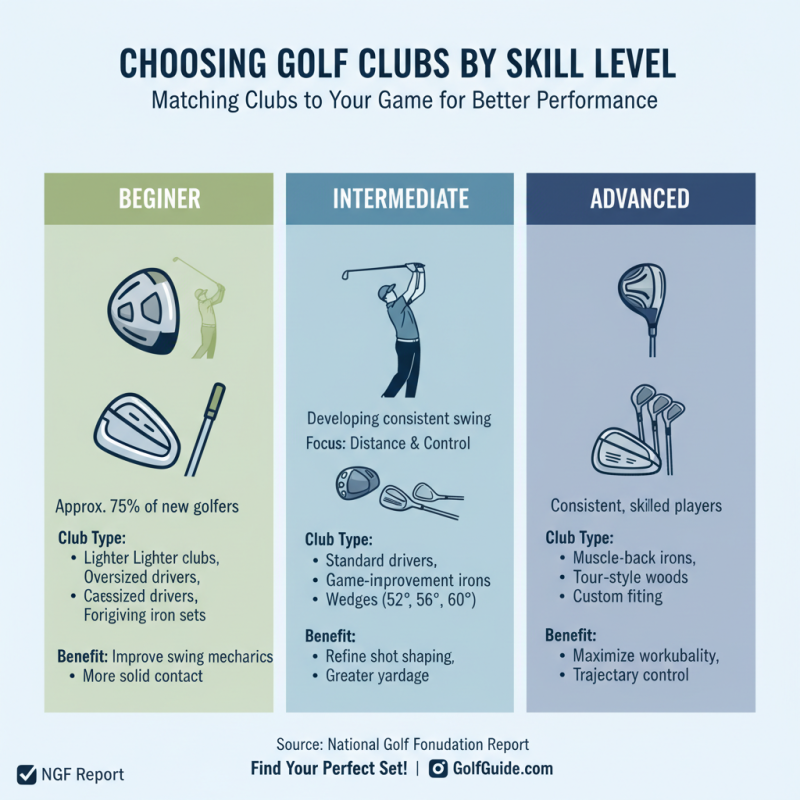
Choosing the right golf clubs is essential for players at any skill level. Understanding your skill level—beginner, intermediate, or advanced—can significantly influence the choice of clubs. According to a report by the National Golf Foundation, about 75% of new golfers identify as beginners, which means selecting clubs that promote confidence and enhance learning is vital. For beginners, manufacturers often recommend lighter clubs with larger sweet spots, such as oversized drivers and forgiving iron sets, to help improve their swing mechanics and increase the chances of making solid contact.
Intermediate players, typically with a better understanding of their game, often need clubs that offer a balance between forgiveness and control. A study published by Golf Digest indicates that golfers with a mid-handicap (around 10-18) benefit from cavity-back irons, which provide added forgiveness while still allowing for shot-shaping capabilities. Advanced players, on the other hand, may prefer clubs that offer a greater degree of customization, such as blade irons and adjustable drivers, which enable them to fine-tune their performance and express their individual playing style. Understanding these distinctions ensures that golfers invest in equipment that truly complements their skill and enhances their overall game.
Evaluating Clubhead Design: The Impact on Forgiveness and Control
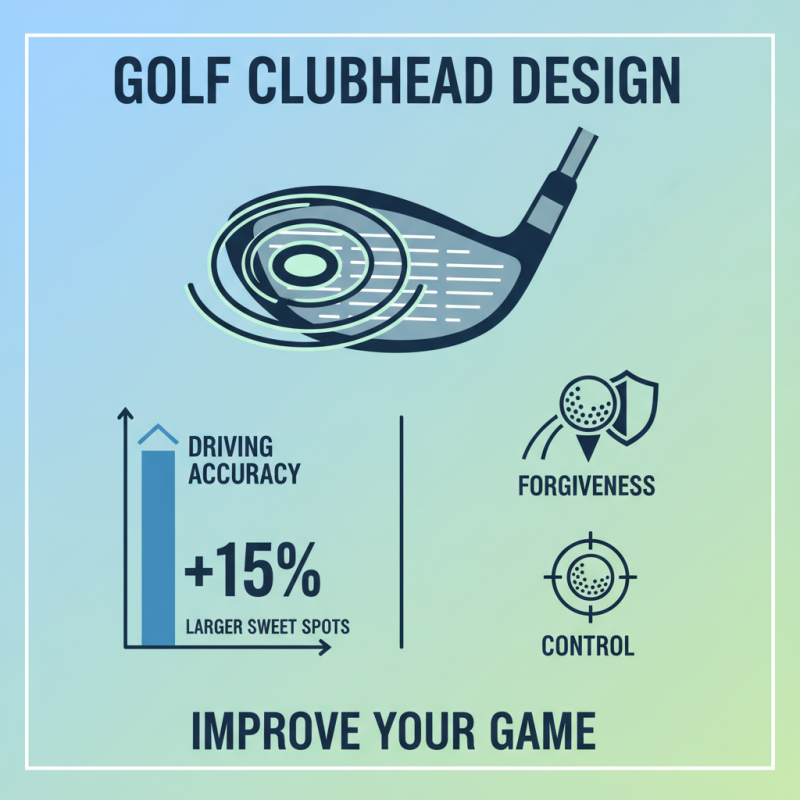
When choosing the best men's golf clubs, clubhead design plays a crucial role in determining a player's performance on the course. A well-designed clubhead can significantly enhance both forgiveness and control, which are essential for achieving consistent shots. According to a report by the National Golf Foundation, golfers who actively use game-improvement clubs with larger sweet spots can see an increase in their overall driving accuracy by nearly 15%. This underscores the importance of selecting clubs that align with one’s skill level and playing style.
Tips: When evaluating clubhead design, consider the properties of materials used. For example, titanium clubheads are known for being lightweight and strong, allowing for larger faces that can improve forgiveness. Additionally, features such as perimeter weighting can help stabilize the club during impact, which is advantageous for less experienced players. Look for clubs that offer adjustable settings—these can tailor the club to optimize your swing mechanics.
Moreover, the shape of the clubhead dramatically affects aerodynamics and ball trajectory. Studies indicate that clubs designed with more streamlined profiles can increase swing speed by an average of 2 mph, potentially adding additional distance to your shots. Pay attention to how the clubhead feels at address and during the swing to ensure that it inspires confidence at the tee. Choosing wisely can dramatically elevate your game and enjoyment on the greens.
Assessing Loft and Lie Angles: Optimizing Launch and Trajectory
When choosing the best men's golf clubs for your game, understanding loft and lie angles is crucial for optimizing launch and trajectory. Loft refers to the angle of the clubface, impacting the ball's flight path and distance. Higher lofted clubs create a steeper launch angle, ideal for shorter shots, while lower lofted clubs produce a flatter trajectory, useful for long drives. Evaluating your swing and play style can help you select clubs that enhance your performance.
**Tips:** Always examine the manufacturer's specifications for loft and lie angles before purchasing. A fitting session with a professional can be invaluable; clubs that align with your height and swing characteristics will significantly improve your shots. Additionally, experimenting with different lofts during practice can help you understand how they affect your game and make better-informed decisions.
Lie angle also plays a vital role in how the club interacts with the ground at impact. A properly fitted lie angle ensures the clubhead strikes the ball squarely, promoting accuracy and consistency. A club that’s too upright or flat can cause hooks or slices.
**Tips:** To find your ideal lie angle, consider getting a custom fitting, where professionals can analyze your stance and swing. Always be aware of how different terrains and grass types can affect the club's behavior; adjusting your lie angle may be necessary as conditions change. By focusing on these aspects, you can significantly enhance your golfing experience and lower your scores.
How to Choose the Best Mens Golf Clubs for Your Game - Assessing Loft and Lie Angles: Optimizing Launch and Trajectory
| Club Type |
Loft Angle (Degrees) |
Lie Angle (Degrees) |
Launch Angle (Degrees) |
Trajectory |
| Driver |
9.5 |
58 |
12 |
High |
| 3 Wood |
15 |
57 |
14 |
Medium |
| 5 Iron |
27 |
61 |
21 |
Medium to Low |
| 7 Iron |
34 |
61.5 |
30 |
Medium |
| Putter |
3 |
70 |
1 |
Low |
Personalizing Your Set: Key Clubs Every Golfer Should Consider
When selecting the best men’s golf clubs, personalizing your set is crucial to optimizing performance on the course. According to a report by the National Golf Foundation, 30% of golfers believe that having the right equipment is a key factor in their success. One of the most important clubs to consider is the driver. With advancements in technology, modern drivers can significantly improve distance and accuracy. An article from Golf Digest highlights that nearly 80% of amateurs significantly benefit from a driver fitted to their swing speed and playing style, emphasizing the importance of professional fitting sessions.
Aside from the driver, attention should be given to the irons and wedges in your set. A fitting study published by the PGA of America suggests that nearly 50% of golfers struggle to hit their irons consistently. Selecting the right set of irons tailored to your skill level and swing mechanics can lead to better shot-making. Additionally, incorporating a versatile wedge can enhance short-game performance, with data showing that around 60% of strokes in a typical round come from around the greens. Thus, tailoring both your irons and wedges to suit your personal style is essential for golfers seeking to lower their scores.
Choosing the Right Golf Clubs for Your Game
This bar chart illustrates the average distance (in yards) that male golfers of different skill levels can expect to hit with various types of clubs. Understanding the average distances can help in selecting the right clubs for personalized performance.