How to Choose the Best Golf Wedges for Your Game?
Choosing the right golf wedges can significantly enhance your game. According to renowned golf expert Phil Mickelson, "Wedges give you the ability to score." This statement underscores the importance of selecting the right wedges tailored to your skill level and playing style.
Golf wedges come in various lofts, grinds, and finishes. Understanding these options can seem overwhelming. Many players often overlook fine details like bounce and sole design, but these factors play a crucial role in performance. For instance, a higher bounce can help in soft conditions, while a lower bounce suits firmer turf.
Reflecting on these complexities, players should assess their playing conditions and personal preferences. A good wedge could mean the difference between a par or a double bogey. Experimenting with options and seeking advice from professionals can help clarify the best choices. Make informed decisions with your golf wedges, and you'll see improvements in your short game.

Understanding Different Types of Golf Wedges Available on the Market
Choosing the right golf wedges can significantly impact your short game. Understanding the types available is essential for every golfer. Wedges mainly include pitching wedges, gap wedges, sand wedges, and lob wedges. Each serves a unique purpose, catering to various needs on the course.
Pitching wedges are great for longer approach shots. They are typically used when you’re about 100-130 yards from the green. Gap wedges fill the distance between pitching and sand wedges, making them crucial for accuracy around the greens. Sand wedges help in bunker shots. Lob wedges are designed for high, short shots, perfect for tricky lies.
Tips: When selecting wedges, consider your skill level. More experienced players might prefer versatile options. Beginners should focus on ease of use. Also, pay attention to the bounce of the wedge, which affects how it interacts with the turf. Getting this right can be tricky, so experiment with different angles before committing. Reflecting on your comfort with each type can guide your choice. The wedge you feel confident with will lead to better shots!
Types of Golf Wedges and Their Common Uses
This chart illustrates the different types of golf wedges available on the market and their common uses based on player preferences and shot types.
Key Factors to Consider When Selecting Golf Wedges for Your Skill Level
Choosing the right golf wedges can significantly enhance your game. Consider your skill level when making this important decision.
Beginners should opt for more forgiving wedges. Look for wider soles to help with contact and reduce mishits. A higher bounce angle can prevent digging into the turf.
These features make it easier to play various lies.
For intermediate players, personal preference becomes crucial. Explore different grind options to tailor your performance. Testing each wedge in practice will reveal what feels best.
Focus on the lofts you need for your short game. This can vary based on your swing style and course conditions.
When selecting wedges, think about your strengths and weaknesses. If you struggle with chipping, a versatile, easy-to-use wedge may help.
Experimenting with different bounce and loft configurations will provide insight. Reflect on your experiences on the course to guide your choice.
It’s all about finding what boosts your confidence and performance in crucial moments.
The Importance of Bounce and Loft in Choosing Golf Wedges
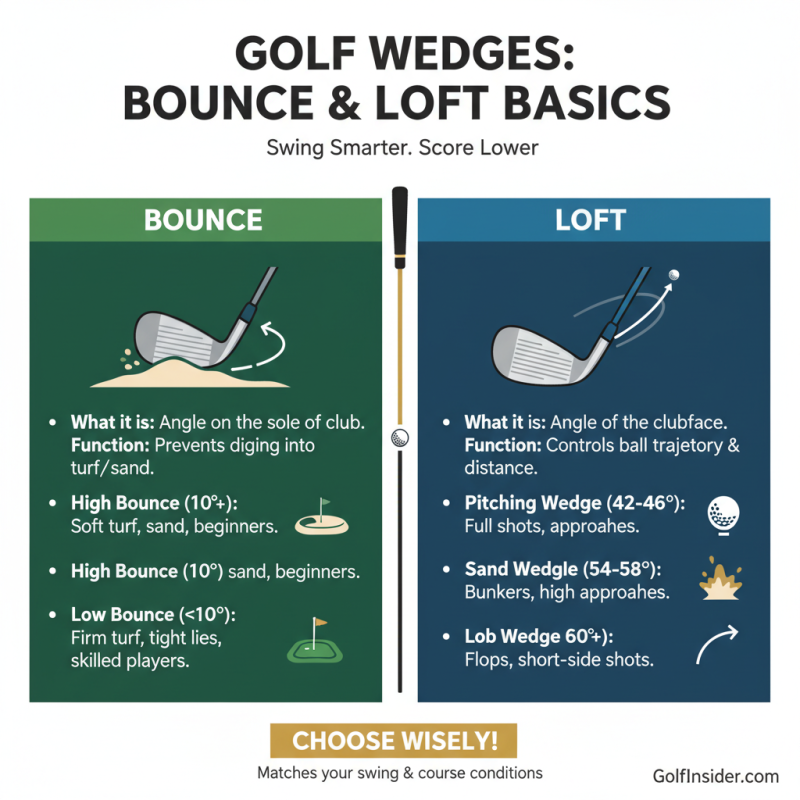
When selecting golf wedges, understanding bounce and loft is crucial. Bounce refers to the angle between the leading edge and the lowest point of the club. A higher bounce is beneficial for softer ground. It allows the club to glide over the turf and prevents digging. In contrast, a lower bounce suits firmer conditions. Players in different environments may find themselves needing varied bounce angles. It's important to test which bounce works best for your swing and course conditions.
Loft, on the other hand, affects the height and distance of your shots. Wedges typically have loft angles ranging from 48 to 64 degrees. A higher loft facilitates shots that require more elevation. This is vital for short game scenarios like flop shots and delicate chips. Meanwhile, lower loft wedges can produce longer, controlled shots from the fairway. Choosing the correct loft caters to your unique playing style. It is often a trial-and-error process to find the right fit.
Understanding the interplay of bounce and loft is essential. Each player's needs differ based on swing characteristics and course conditions. Ultimately, awareness of these factors can lead to improved performance. Experimentation and practice will yield the best results.
Evaluating Wedge Grinds and Their Impact on Your Performance
When it comes to golf wedges, the grind is a crucial aspect that impacts your performance. Different grind options cater to various swing types and course conditions. A wedge with a low grind is favorable for players with a shallow angle of attack, while a high grind suits those who tend to take a steeper divot. Understanding these nuances can enhance your game significantly.
Evaluating your typical lie and turf conditions can help you make better choices. For instance, if you often play in soft, damp conditions, a wider sole can prevent the club from digging too deeply. This knowledge directly influences your consistency around the greens. Many golfers overlook the importance of wedge grinds and later find themselves struggling with specific shots. Experimenting with different grinds on the range can be enlightening. You might discover that a mid-grind, which balances versatility, improves your short game comfort.
While it's easy to fall into a routine with one wedge type, reflecting on your performance is essential. Are you consistently getting the desired outcomes? If not, consider re-evaluating your choices. A well-selected grind can be the difference between a perfect flop shot and a struggling bunker escape. The journey to finding the right wedge is often personal, requiring time and experimentation. Embrace the process of learning what works best for your unique golfing style.
How to Test and Match Wedges to Your Swing Style and Course Conditions
When selecting golf wedges, understanding how to match them to your swing style and the course conditions is crucial. According to the USGA, about 25% of a golfer's strokes come from within 100 yards of the hole. This highlights the importance of having the right wedges in your bag to improve your short game. Testing different lofts and grinds can help you discover what works best for your swing.
Fit your wedges to the course conditions you often face. For example, firm courses may require lower bounce options, while soft conditions benefit from higher bounce wedges. Research indicates that 70% of golfers struggle with accuracy from these distances. A customized approach can help improve this, as players often neglect wedge selection. Spend time at the driving range, testing different options to see how they perform with your swing speed and style.
Be mindful of the fact that choice is subjective. A wedge favored by many may not suit your unique technique. Keep track of your performance with each type of wedge to identify trends that may guide your decision-making. Regular reflection on your game will help in picking the right wedges that complement your skills and course challenges.