Why Choosing the Right Golf Shafts Can Improve Your Game Performance
Choosing the right golf shafts is a crucial aspect of improving overall game performance. Research shows that the performance of golf clubs can be impacted by nearly 50% based on the type of shaft selected. According to the National Golf Foundation, approximately 75% of golfers do not realize that the shaft’s flex, weight, and material can significantly alter their swing dynamics and ultimately their scores. Understanding these intricacies is essential for players aiming to lower their handicap and enhance their playing experience.
Industry expert Dr. Thomas B. Williams, a renowned performance coach, states, “The shaft is the engine of the golf club; it’s where power and precision meet.” His insights underscore the importance of selecting the appropriate golf shafts, as they not only influence distance but also accuracy and consistency during play. With advancements in shaft technology, players are now able to customize their equipment more than ever before, making it vital to understand how to match shaft characteristics with personal swing styles. By exploring the relationship between golf shafts and swing performance, golfers can make informed decisions that lead to significant improvements in their game.

Understanding Golf Shaft Flex: A Key to Optimizing Player Performance
Understanding golf shaft flex is crucial for optimizing player performance on the course. Shaft flex refers to the amount of bend a shaft undergoes during a swing, which plays a significant role in determining the angle and distance of a shot. According to a study published by the Golf Industry Association, players using the correct shaft flex can see an improvement in their driving distance by up to 10 yards compared to those mismatched with their swing characteristics. This underscores the importance of individual assessment when selecting golf shafts.
Moreover, research from the International Golf Federation indicates that nearly 90% of amateur golfers are using shafts that do not align with their swing speed or style. Shaft flex is categorized as extra stiff, stiff, regular, and senior, each catering to different swing speeds and player types. For instance, a player with a swing speed over 100 mph might benefit from a stiff or extra stiff shaft, while those with slower swings might find regular or senior flex more favorable. Selecting the appropriate flex not only enhances consistency but can also significantly reduce unwanted side spin, leading to straighter shots and improved overall accuracy.
The Impact of Shaft Weight on Swing Speed and Distance
Choosing the right golf shafts is essential for players aiming to enhance their golf performance, especially when it comes to swing speed and distance. The weight of a golf shaft can significantly influence how a player swings the club. According to the PGA and other industry experts, lighter shafts can result in increased swing speed, allowing golfers to generate more clubhead speed at impact. A study by Golf Digest highlights that players using lighter shafts can see an average increase of 2-4 miles per hour in swing speed, translating into longer drives.
Conversely, heavier shafts often provide more stability and control, particularly for those with faster swing tempos. The ideal shaft weight varies among individuals; however, research indicates that a 10-gram difference in shaft weight can lead to a difference in swing speed of approximately 1 mile per hour. Many players might not realize the importance of matching shaft weight to their swing characteristics and strength, which can lead to optimization in both distance and accuracy on the course. Ultimately, understanding the impact of shaft weight can empower golfers to select the optimal equipment, ensuring they achieve their highest potential on the course.
Impact of Shaft Weight on Swing Speed and Distance
Material Matters: Comparing Steel and Graphite Shafts for Performance
When it comes to enhancing your golf performance, the choice of shaft materials—steel or graphite—plays a crucial role. Steel shafts, renowned for their durability and consistency, typically offer better control and feedback, making them a preferred option for many skilled players. According to the National Golf Foundation, over 60% of professional golfers use steel shafts in their irons due to their ability to provide improved accuracy and stability. However, steel shafts can be heavier, which may not satisfy the needs of all golfers, particularly those with slower swing speeds.
On the other hand, graphite shafts are lighter and can promote increased swing speed, making them attractive to a wider audience, including beginners and those with physical limitations. A study from Golf Digest indicates that golfers using graphite shafts can achieve up to 10% more distance compared to their steel counterparts, thanks to the enhanced whip effect during the swing. This added distance can be critical for improving overall game performance, especially for players looking to optimize their drives off the tee.
Tips: When selecting a shaft, consider your swing speed and playing style; lighter graphite shafts can assist in generating faster swings, while heavier steel options may offer better precision for seasoned players. Additionally, testing various shafts through a fitting session can provide valuable insights into which material complements your individual swing characteristics best. Always remember that the right equipment can significantly impact your performance on the course, so take the time to make an informed decision.
Shaft Length and Its Role in Accuracy and Consistency of Shots
When it comes to golf performance, the shaft length of your clubs plays a pivotal role in the accuracy and consistency of your shots. The right shaft length allows for a more comfortable swing while maintaining optimal control. If your shafts are too long or too short, it can lead to inconsistent ball striking, altered swing planes, and ultimately a less effective game. Golfers often underestimate how much shaft length affects their posture and balance throughout the swing, which directly correlates with shot precision.
To ensure you're playing with the appropriate shaft length, consider getting professionally fitted. This customized approach can help you identify the best length that suits your height, arm length, and swing style. A fitting session often reveals how slight adjustments can lead to significant improvements in your game. Additionally, practice with your chosen shaft length can allow you to develop a feel for how it influences your shots.
**Tips:** Always pay attention to where your hands are during your swing; consistent hand placement can help you gauge the effectiveness of your shaft length. Also, experiment with different lengths during practice; it can be enlightening to see how each variation impacts your accuracy and consistency. Lastly, regularly assess your performance and don't hesitate to readjust your shaft length as your swing evolves or as your game progresses.
Why Choosing the Right Golf Shafts Can Improve Your Game Performance - Shaft Length and Its Role in Accuracy and Consistency of Shots
| Shaft Length (Inches) |
Average Accuracy (%) |
Average Distance (Yards) |
Consistency Rating (1-10) |
| 43 |
85 |
240 |
8 |
| 44 |
80 |
235 |
7 |
| 45 |
75 |
230 |
6 |
| 46 |
70 |
225 |
5 |
Choosing the Right Shaft for Your Swing Type: Insights from Industry Data
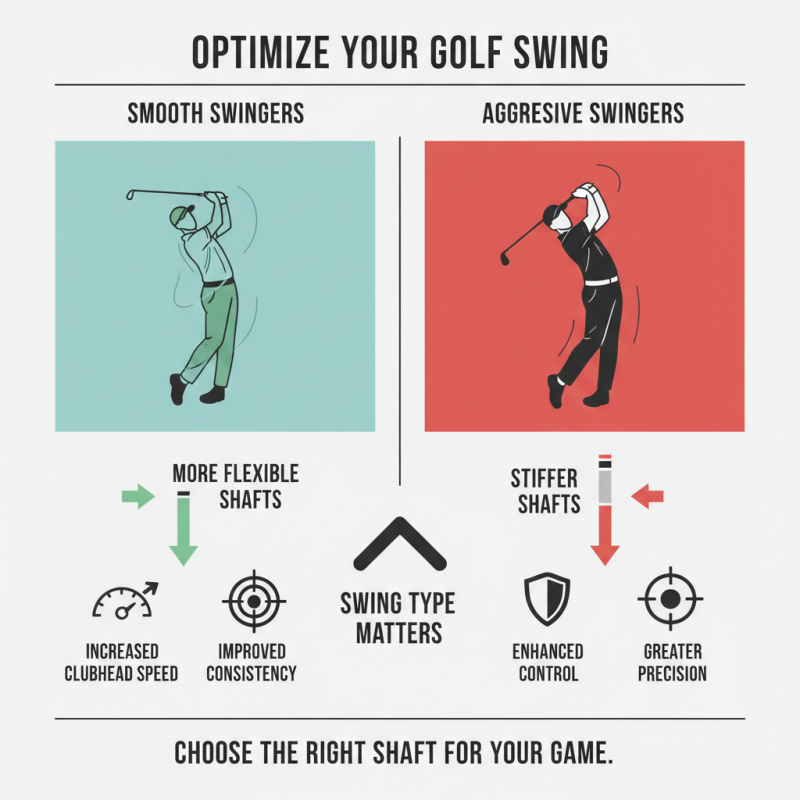
When selecting the right golf shaft, understanding your swing type is paramount for optimizing performance on the course. Industry data indicates that different swing types—such as smooth, quick, or aggressive—respond distinctly to various shaft flex profiles and materials. For instance, players with smoother swings may benefit from more flexible shafts, which can enhance clubhead speed and improve consistency. In contrast, golfers with a more aggressive swing might find stiffer shafts provide the control and stability they need for precision.
Moreover, insights drawn from swing speed metrics reveal that the appropriate shaft weight can significantly affect game performance. Lighter shafts may aid in generating faster swing speeds, while heavier options can offer improved control for players who can handle the added weight. Additionally, understanding your launch angle preference can further refine your shaft selection, ensuring that the overall characteristics of the shaft align with your playing style. By leveraging these insights, golfers can tailor their equipment to align more closely with their unique mechanics, ultimately leading to enhanced performance on the green.