Skip to content

Who Are the Top 10 7 Wood Manufacturers in China?

Choosing a 7 wood is about more than its finish or price. The club’s head shape, face response, shaft options, and quality control all affect how it performs on the course. China has a broad golf-equipment supply base, including factories that produce clubs for domestic and international brands. Yet “manufacturer” can mean different things: an original equipment producer, a design-and-production partner, or a trading company coordinating orders.

This guide introduces ten Chinese manufacturers connected with 7 wood production and golf-club manufacturing. It is intended as a practical starting point, not a definitive ranking. Company capabilities, product ranges, and certifications can change, so buyers should confirm details directly. Ask for current specifications, material information, sample policies, production lead times, and inspection procedures. A clear product sheet and a consistent sample can tell you more than a polished catalog. Details matter.

The right supplier depends on your needs. A small retailer may prioritize flexible quantities and communication, while a larger brand may focus on repeatable production and customization. Compare each company using the same questions, and look beyond headline claims. No list can be perfect. Public information may not reveal every factory’s role or capacity, and that uncertainty deserves attention. Use the profiles ahead to narrow your options, then verify the essentials before making a purchasing decision.

Who Are the Top 10 7 Wood Manufacturers in China?

Define a 7-Wood: Typical 21° Loft and the USGA/R&A 460 cm³ Head-Volume Limit

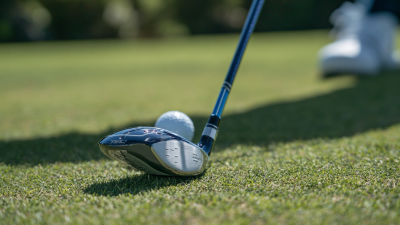
A 7-wood is commonly built with about 21° of loft, placing it between many 5-woods and 9-woods. The number is a useful label, not a universal specification. The USGA and R&A do not define a 7-wood by its loft; manufacturers can set different angles. That difference matters. A few degrees can change launch height, carry distance, and how the club sits beside a player’s other fairway woods.

The governing reference is the USGA and R&A’s Equipment Rules, Appendix II, which caps wood-clubhead volume at 460 cm³, with a 10 cm³ measurement tolerance under the prescribed test. This is a ceiling, not a recommended target. A 7-wood can sit well below it and still offer a broad face, a low center of gravity, and enough sole width to glide through light rough. When comparing specifications, check the stated loft and measured head volume rather than relying on the “7-wood” label alone. Numbers help, but turf interaction and actual launch still deserve a test.

Map China’s Golf-Club OEM Sector Through Output, Export, and Certification Data

China’s 7-wood OEM sector is best assessed through three separate signals: production capacity, export performance, and verifiable quality systems. UN Comtrade classifies complete golf clubs under HS 950631 and golf-club parts under HS 950639. These categories offer a useful export baseline, but neither isolates 7 woods nor identifies contract manufacturers. China Customs shipment records can add value and quantity by destination. Compare both: a high export value may reflect premium products, while unit volume can reveal scale. Still, neither figure alone proves factory output.

Certification adds another layer. The ISO Survey reports management-system certificates by country and standard, including ISO 9001. A certificate supports evidence of a documented quality system; it does not verify annual club production or consistent performance. Buyers should check certificate scope, site address, and validity, then compare them with factory audits and sample testing. Look for concrete evidence: a traceable production run, recorded loft and lie measurements, and inspection logs for finished heads. Small details matter.

A credible “top 10” ranking should disclose its period, units, and data sources. Export records can include trading companies, while factory disclosures may be incomplete. That makes rankings imperfect. Use them as screening tools, not proof of capacity. Cross-check public trade data against site-level certification and documented OEM experience before drawing conclusions.

Who Are China’s Top 10 7-Wood Manufacturers?

Public data availability for comparing China-based golf-club OEMs

Comparable, public company-level data for 7-wood output, exports, and certification coverage is not available in a standardized dataset. Customs category HS 950631 covers golf clubs generally, not individual club types or OEM factories; certification records do not provide a comparable production or export ranking. A data-backed top-10 ranking cannot be established from these measures alone.

Rank 10 Chinese 7-Wood Manufacturers by Production Capacity and Quality Metrics

Ranking China’s ten leading 7-wood manufacturers requires more than comparing factory size. The R&A’s 2024 Global Golf Participation Report estimates 108 million golfers across 146 countries, including off-course players. That signals broad demand, but it does not reveal how many fairway woods any factory makes. UN Comtrade’s HS 950639 category groups golf clubs with other golf equipment, so export totals cannot identify 7-wood output either. The data has limits.

A practical ranking should score verified annual club capacity, on-time delivery, and defect rates, then assess head consistency, face-angle tolerance, shaft alignment, and repeatable loft measurements. ISO 9001:2015 offers a useful quality-management framework, but certification alone cannot prove that a 7-wood performs consistently. Sample clubs should be measured on a loft-and-lie gauge, then checked for weight variation and face alignment. Small details matter. Factory visits and batch records are stronger evidence than catalog claims, yet public data seldom provides comparable figures for ten Chinese plants. Any ranking without audited production numbers should say so; otherwise, its precision is mostly cosmetic.

Compare Clubhead Materials, Shaft Options, MOQ, Lead Times, and Defect Rates

When assessing 7-wood manufacturers in China, compare the actual clubhead specification, not just the material named on a sales sheet. Stainless steel is a common choice for durable, cost-conscious heads; some designs use titanium or composite components to manage weight. Ask for a cross-section drawing, finish samples, and the measured head weight. Small differences can affect swing feel.

Shaft options may include graphite in different weights, flexes, and torque ranges. Confirm the shaft model, tip diameter, length, and whether the quoted price includes a grip and assembly. Request a sample before approving production. It is a simple check. Yet samples may not match every production batch, so ask how specifications are controlled.

MOQ and lead times depend on tooling, customization, and component availability. Get separate estimates for samples, first production, and repeat orders. For defect rates, request the inspection method and recent batch data, including how defects are counted. A percentage without a sample size is weak evidence. Compare finished clubs against agreed weight, loft, lie, paint, and shaft tolerances. I would also allow time for rework; schedules often look cleaner on paper.

Evaluate Supplier Claims Against Performance Tests and USGA/R&A Equipment Rules

When comparing Chinese 7-wood suppliers, treat speed and distance claims as testable claims, not proof of quality. The USGA and R&A Equipment Rules set a 239-microsecond limit for clubhead characteristic time, with an 18-microsecond test tolerance in the test protocol. Ask for the measured result, test date, head model, and test conditions. A catalog statement that a face is “high rebound” tells you little by itself.

Numbers can mislead.

Request independent measurements for loft, lie, face angle, head weight, and characteristic time. Then test samples using the same ball, launch monitor, and swing-speed range. Record ball speed, launch angle, spin, and carry; a single long shot is not reliable evidence. The USGA/R&A equipment rules provide the compliance reference, but they do not guarantee a particular launch or distance.

That matters. Small changes in loft or shaft length can shift results, so compare several heads rather than one. I would also keep the test sheet beside the production sample: factories can improve, but specifications can drift. A neat report is useful; repeatable results are better.