Skip to content

Top Trampoline Manufacturers Worldwide for Global Buyers

Choosing reliable Trampoline Manufacturers is a practical decision for importers, distributors, retailers, and commercial play-space developers. Product appearance matters, but it cannot replace verified safety performance, stable production, and responsive communication. A brightly colored trampoline may attract attention in a showroom. Its frame strength, enclosure design, stitching quality, and weather resistance determine its long-term value.

This guide examines leading Trampoline Manufacturers serving international buyers. It considers factory experience, product categories, customization options, quality-control procedures, certifications, minimum order quantities, and export support. Buyers should look beyond polished websites and impressive catalogs. Factory audits, sample testing, material records, and clear warranty terms offer stronger evidence of reliability. Questions about replacement parts matter too. A damaged spring or net should not create weeks of uncertainty.

No manufacturer is perfect. Even experienced suppliers may have uneven communication, changing lead times, or limited regional support. That deserves attention. Shipping conditions, local installation requirements, and intended user age can also influence the right choice. A supplier experienced with home trampolines may not understand the demands of an indoor family entertainment center. Likewise, a factory offering low prices may provide fewer inspection controls.

The manufacturers discussed here are assessed through a buyer-focused lens, combining practical procurement concerns with product knowledge. The goal is not to promote one universal winner. It is to help global buyers compare evidence, identify risks, and select a partner suited to their market, budget, and safety expectations. Careful research still matters.
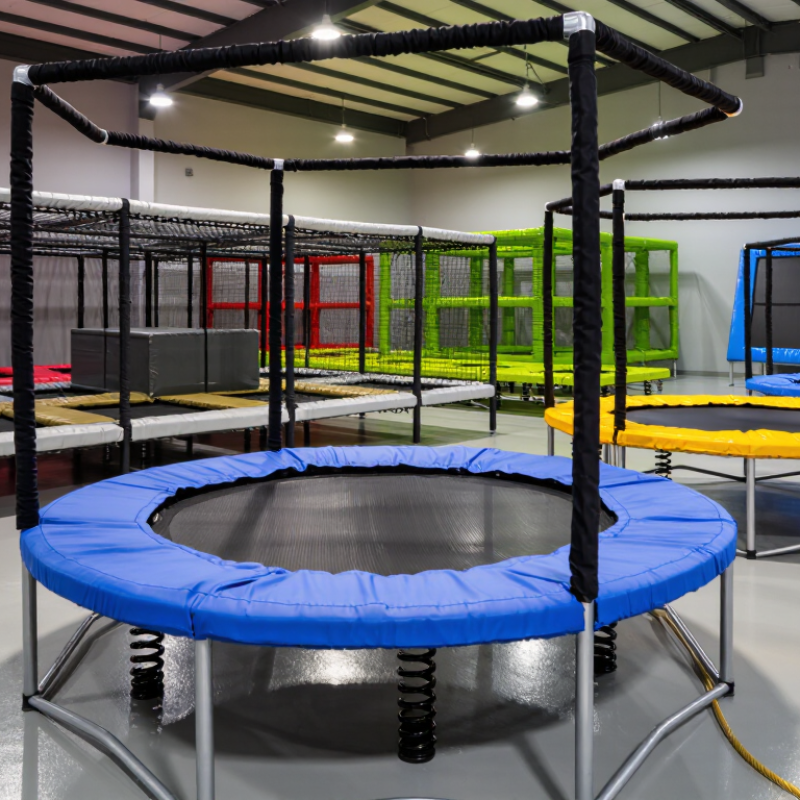
Top Trampoline Manufacturers Worldwide for Global Buyers

What Defines a Leading Trampoline Manufacturer Worldwide

A leading trampoline manufacturer worldwide combines engineering discipline with practical field experience. Its team understands how children land, twist, and repeat movements across thousands of cycles. Product design should include stable frames, evenly tensioned springs, UV-resistant mats, and padded edges that stay attached during regular use. Small details matter. Stitching should remain tight after rain, heat, and repeated stretching.

Reliable manufacturers test more than one sample. They check frame welds, spring fatigue, enclosure strength, and packaging damage before shipment. Independent laboratory testing can support compliance with relevant safety requirements in target markets. Clear manuals should show assembly steps, weight limits, inspection points, and replacement procedures. Factory records should also trace materials and production batches. This makes quality problems easier to identify.

Global buyers should examine communication, not just catalog images. A professional supplier answers technical questions with measurements and test evidence. It explains delivery conditions, spare-part availability, and warranty boundaries without vague promises. Regular factory audits can reveal whether production matches approved samples. Yet no manufacturer is perfect. A polished sample may hide inconsistent stitching or changing material quality. Honest companies acknowledge these risks and improve their controls. That willingness to review mistakes often matters more than impressive advertising.

How Trampoline Manufacturers Differ by Product Range and Expertise

Top Trampoline Manufacturers Worldwide for Global Buyers

Trampoline manufacturers differ sharply in product range and technical expertise. Some focus on compact backyard models with galvanized frames, spring covers, and simple safety nets. Others produce commercial systems for parks, schools, and fitness centers. These products require thicker steel, reinforced anchors, replaceable padding, and clearer maintenance procedures.

A serious supplier should explain its testing process, not only display colorful photographs. Ask for frame load results, fabric specifications, UV-resistance data, and installation instructions. Experienced manufacturers usually control key steps, including tube bending, welding, coating, stitching, and final inspection. Small details matter. A loose net seam can become a costly problem after installation.

Customization also reveals capability. Reliable factories can adjust mat diameter, frame height, enclosure design, packaging, and spare-part supply without weakening safety features. Global buyers should request a production sample and inspect welds, stitching, edge protection, and carton strength. Certificates are useful, but traceable test records provide stronger evidence. A polished catalog may hide inconsistent quality between batches. I have seen buyers focus on unit price and overlook replacement parts, inspection costs, or delivery damage. That approach rarely remains cheap. No manufacturer gets everything right. The better question is whether the supplier identifies weaknesses, documents corrective action, and communicates clearly when specifications need revision.

Which Safety Standards Matter to Global Trampoline Buyers

For global trampoline buyers, safety standards should guide supplier selection, not marketing claims. The U.S. Consumer Product Safety Commission’s NEISS-based estimates have repeatedly placed trampoline-related emergency-department injuries near 100,000 cases annually. That figure varies by year, but it signals a serious purchasing risk. Buyers should request evidence against ASTM F381 for consumer trampolines, EN 71-14 for domestic products, or EN 13219 for gymnastic equipment.

Look beyond a certificate. Check the actual test scope, laboratory accreditation, production date, and product model. ISO/IEC 17025 accreditation can help confirm that a laboratory is technically competent. Inspect frame welds, spring covers, mat stitching, enclosure gaps, pole padding, anchor points, and UV resistance. A reliable supplier should provide test records, material specifications, warning labels, and assembly instructions in the destination market’s language.

The European Commission’s 2023 Safety Gate report recorded 3,412 consumer-product alerts across Europe. It shows how quickly unsafe products can attract regulatory attention. Still, paperwork can be incomplete. A certificate alone is not proof of safe production. Request batch-level inspection photos and independent pre-shipment testing. Ideally, reproduce key checks: measure enclosure openings, inspect exposed metal, and verify that the assembled frame remains stable under repeated loading. Some buyers overlook installation conditions, which may weaken an otherwise compliant trampoline. That remains a practical gap worth challenging.

Top Trampoline Manufacturers Worldwide for Global Buyers - Which Safety Standards Matter to Global Trampoline Buyers

A practical comparison of commonly referenced trampoline safety requirements, testing areas, and buyer documentation

Target Market Commonly Referenced Standard or Regulation Product Scope Important Safety Areas Typical Buyer Evidence to Request Buyer Priority
European Union and EEA EN 71-14, Trampolines for domestic use, where the product falls within the scope of the European toy-safety framework. General product-safety obligations may also apply. Domestic-use trampolines designed for children or family use, depending on product classification and intended use. Frame and leg stability, enclosure-net performance, padding, jumping-mat strength, entrapment prevention, assembly instructions, warnings, and foreseeable misuse. Test report against the applicable EN 71-14 edition, technical file, risk assessment, traceability information, labels, warnings, and instructions in the destination language. Critical
United States ASTM F381, Standard Safety Specification for Components, Assembly, Use, and Labeling of Consumer Trampolines, together with applicable U.S. consumer-product laws and CPSC requirements. Consumer trampolines sold for residential use, including associated frames, mats, springs, pads, enclosures, and labels. Structural integrity, component durability, enclosure design, frame padding, openings and entrapment hazards, assembly safety, warnings, and instructional material. Independent laboratory report to the applicable ASTM edition, material and component test records, product markings, warning-label artwork, and a U.S. compliance-control plan. Critical
United States: Performance and Institutional Use ASTM F2225, Standard Specification for Consumer Trampoline Safety, may be relevant depending on product type and intended application. Commercial facilities can require additional operational standards and insurance criteria. Consumer-oriented trampoline systems and safety features associated with residential or supervised-use products. Product configuration, enclosure systems, user instructions, foreseeable use, impact-related hazards, and component performance. Applicable ASTM test report, engineering drawings, load and durability data, maintenance instructions, and evidence that the product scope matches the intended venue. High
Canada Canadian consumer-product and toy-safety requirements may apply according to the product’s intended age, presentation, and use. ASTM or EN test methods are often used as supporting evidence but do not automatically replace Canadian legal obligations. Residential trampolines and products marketed to children or families. Mechanical hazards, sharp points and edges, small parts where relevant, entrapment, stability, durability, labels, packaging, and bilingual instructions. Canadian regulatory assessment, applicable ASTM or EN laboratory reports, English/French warnings and instructions, bill of materials, and traceability records. High
United Kingdom EN 71-14 may be relevant for trampolines classified as toys. The applicable UK product-safety framework depends on product classification, intended users, and sales channel. Domestic-use trampolines marketed for children, families, or general consumer use. Frame and enclosure stability, padding, net openings, jumping-mat durability, safe assembly, warnings, and user instructions. UK market compliance assessment, relevant EN test report, technical documentation, English labels and instructions, and product traceability details. High
Australia and New Zealand AS/NZS 8124.6 or the current national adoption of ISO 8124-4 may be relevant for swings, slides, trampolines, and similar activity toys for domestic use. Confirm the current edition and exact product scope before testing. Domestic outdoor activity equipment and trampolines classified as children’s activity toys. Stability, structural strength, fall and entrapment hazards, access openings, protective padding, corrosion resistance, assembly, and warnings. Test report to the current applicable edition, local-market risk assessment, English safety instructions, outdoor durability information, and product identification records. Critical
Japan Product-specific Japanese consumer-product and toy-safety requirements may apply. Overseas standards such as ASTM or EN can support technical evaluation but should not be treated as automatic Japanese approval. Residential trampolines and children’s activity products imported for the Japanese market. Mechanical safety, stability, moving parts, entrapment, labeling, instructions, age suitability, and language requirements. Japanese regulatory review, relevant test reports, Japanese warnings and instructions, importer documentation, and traceability information. High
Global Cross-Market Procurement ISO 9001 certification can support manufacturing process control, but it is not a trampoline product-safety certification. Buyers should specify the destination-market standard and current edition in the purchase contract. Manufacturing, private-label, export, and multi-country distribution programs. Consistent materials, weld quality, spring and mat durability, UV resistance, packaging protection, change control, batch traceability, and corrective-action procedures. Valid third-party reports, factory quality manual, inspection plan, sample approval records, material declarations, batch records, social or ethical audit evidence where required, and recall procedures. Essential
Buyer note: Standards and legal requirements can change by product classification, intended age, venue, country, and sales channel. Always confirm the current edition, test scope, labeling language, and destination-market obligations with the relevant conformity-assessment body or competent authority before placing a purchase order.

How to Evaluate Quality, Certifications, Pricing, and Production Capacity

Choosing top trampoline manufacturers requires more than comparing catalog photos. Quality starts with frame steel, weld consistency, spring fatigue resistance, UV-treated fabric, and secure enclosure connections. The U.S. Consumer Product Safety Commission reported an estimated average of about 102,000 trampoline-related emergency department injuries annually from 2014 to 2016. That figure makes structural testing essential. Ask for test reports against ASTM F381 or EN 71-14, depending on the destination market. Verify the laboratory, test date, product model, and sample identification. A certificate PDF alone proves little.

Pricing should be separated into materials, tooling, packaging, inspection, and shipping. Request at least three comparable quotations. A lower price may reflect thinner tubing, fewer springs, or weaker stitching. A higher quote may also hide inefficient production. Check steel specifications and replacement-part costs. Production capacity needs evidence, not promises. Review monthly output, lead times, peak-season schedules, quality-control staffing, and recent factory audit records. Capacity claims should match purchase orders, machinery, and warehouse space.

Tips: Ask for a pre-shipment inspection. Measure frame diameter, weld points, net tension, and carton damage. Use independent sampling for large orders. The Global Harmonization Task Force approach to risk management supports documented hazard analysis, though it is not trampoline-specific. I would also test several units personally. One sample can look excellent, while later batches reveal uneven stitching or noisy springs. That uncomfortable possibility deserves attention.

How to Select the Right Trampoline Manufacturer for Your Market

Selecting a trampoline manufacturer starts with market evidence, not attractive product photos. Fortune Business Insights’ 2024 industry analysis identifies steady global growth, driven by home recreation and commercial leisure facilities. That growth also increases quality risks. A supplier should explain frame steel grades, spring protection, UV resistance, and tested weight limits in clear documents.

Safety data deserves close attention. The U.S. Consumer Product Safety Commission’s NEISS injury estimates have repeatedly shown that trampolines create significant emergency-room exposure. Ask manufacturers for test reports covering enclosure strength, padding thickness, stability, and fatigue performance. Confirm whether products meet relevant standards, such as ASTM F381 or EN 71, for your target market. Certificates alone are not enough. Check the testing laboratory, report date, and product model.

Factory experience matters when specifications change. Request production samples, batch inspection records, and photographs of welding points before placing a large order. An experienced manufacturer should also provide replacement mats, nets, springs, and assembly instructions. The World Bank’s Logistics Performance Index highlights how delivery reliability affects international supply chains, so examine lead times and packaging damage rates. Calculate landed cost, not only factory price. A cheaper frame can become expensive after one rainy season. I have seen buyers overlook spare-part availability. That decision often returns as a service problem. Ask difficult questions early, even when the answers feel inconvenient.