A Migraine Cap Maker designs and produces wearable caps intended to provide cooling or gentle pressure during a headache. The role involves more than choosing fabric. It can include selecting cold-retaining materials, shaping panels around the head, testing seams, and checking whether a cap stays comfortable during ordinary use. Small details matter. A stiff edge, uneven gel filling, or tight elastic may make a product harder to wear.
The need for thoughtful design is clear. The World Health Organization’s 2024 headache disorders fact sheet estimates that headache disorders affected about 3.1 billion people in 2021, with migraine affecting roughly 14% of the global population. These figures describe a substantial health burden, not proof that any particular cap treats migraine. That distinction matters. A responsible Migraine Cap Maker should explain product features plainly, avoid medical promises, and support claims with appropriate testing. For buyers, useful questions include how the cap is cooled, how long it may be worn, and how its materials are cleaned. Manufacturer specifications and user feedback can help, though neither replaces clinical guidance. The category also has limits: fit and comfort vary from person to person. That part is easy to overlook. Learning what a maker actually does helps readers assess construction, materials, and product claims with clearer expectations.
What Is a Migraine Cap Maker?
What a Migraine Cap Maker Does
A migraine cap maker develops and produces wearable cooling caps designed to cover areas such as the forehead and temples. The work begins with practical needs: gentle pressure, smooth seams, and a fit that stays in place while resting. Designers choose fabrics and cooling inserts, then test flexibility, weight, leakage resistance, and fit across different head sizes. These products are intended for comfort, not as a substitute for diagnosis or prescribed care.
The Global Burden of Disease Study 2019, published in The Lancet Neurology, estimated that around 1.1 billion people worldwide experienced migraine. A responsible maker treats that burden seriously without promising a cure. A cooling cap may feel soothing to some people, but experiences vary. Clear instructions, sensible temperature guidance, and careful product testing matter. Small details matter.
Tips: Follow the cap’s chilling instructions, and use a thin cloth if it feels too cold against your skin. Stop if you notice numbness or irritation. Ask a healthcare professional about recurring or changing headaches; a product maker cannot determine their cause.
A migraine cap maker develops and produces soft, stretchable headwear intended to provide cooling or gentle pressure. Design starts with fit: the cap must cover the forehead and temples without slipping or pinching. The Global Burden of Disease Study 2019 estimated that migraine affected about 1.1 billion people worldwide. That scale makes comfort, inclusive sizing, and clear care instructions important—but a cap is not a migraine treatment.
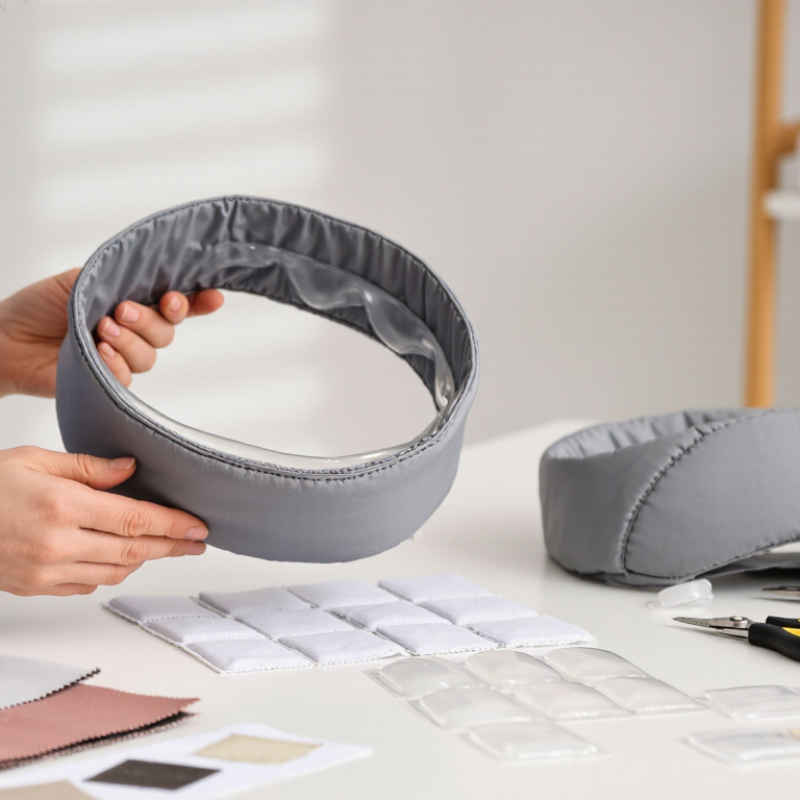
Production typically begins with fabric selection and pattern development. Makers test stretch, seam placement, and how evenly any removable cooling inserts sit around the head. A sample may be worn, adjusted, and tested again; small changes around the brow can make a big difference. Manufacturers then cut panels, sew or bond seams, inspect finished caps, and check that inserts fit securely. Cold retention and fit can vary, so claims should match actual product testing. Not every first sample works.
Tips: Check that seams do not press on sensitive areas. Follow the maker’s cooling instructions, and place a fabric layer between skin and a chilled insert if needed.
A migraine cap maker combines stretch fabric, cooling inserts, and a close-fitting pattern. The outer layer is often nylon, polyester, or spandex: these materials stretch over the forehead and can be washed more easily than exposed gel. Inside, sealed gel panels hold cold from a refrigerator or freezer. They should bend around the temples without creating hard pressure points. Fit matters. Seams, panel placement, and fabric tension affect whether the cap feels soothing or constricting.
Features vary. Some caps cover the eyes and temples; others leave the face open. A removable or evenly distributed gel insert can make cold contact more consistent, while a soft lining reduces direct chill against skin. In a 2013 pilot study published in Headache, researchers examined a cooling cap with 50 adults experiencing migraine. The small study offers preliminary evidence, not a universal performance standard for cap materials. WHO estimates that migraine affected about 14% of people worldwide in 2019, underscoring the need for practical, comfortable options. Still, a cap is not a treatment guarantee. Check for leaks, avoid placing frozen gel directly on bare skin, and stop using it if numbness or irritation develops. The details matter, though product descriptions do not always explain how evenly a cap cools.
What Is a Migraine Cap Maker?
Quality and Safety Standards for Migraine Cap Makers
A migraine cap maker designs and produces wearable caps intended to provide cooling or gentle pressure. Quality begins with materials that touch the skin. A responsible maker should assess fabric dyes, elastic, gel components, and odors, while keeping supplier and batch records. Details matter.
Finished caps need consistent seams, secure closures, and gel compartments that resist leaking during ordinary use. Makers should test cold performance through repeated freeze-and-thaw cycles, not just on a new sample. The cap should remain flexible after chilling, with clear instructions against placing an unprotected, very cold surface on skin. Fit matters. Pressure should feel adjustable, not painfully tight.
Good labeling explains cleaning, storage, intended use, and signs of damage. It should not promise to cure migraine or replace clinical care. Quality teams can track complaints, inspect returned products, and revise designs when users report slipping, uneven pressure, or irritation. These checks are practical, but they cannot guarantee that every person will find a cap comfortable. That limitation deserves honest wording. A small detail can matter.
A migraine cap maker designs or manufactures a wearable head covering intended to provide cooling, gentle compression, or both. The checks below help assess product quality; they are not a substitute for market-specific legal requirements.
| Quality or safety area | What a responsible maker should address | Useful evidence or checks | Relevant standard or guidance |
|---|---|---|---|
| Materials and skin contact | Use materials suitable for their intended contact with skin, with clear information about fabric, gel, dyes, and care. Avoid unsupported claims such as “hypoallergenic.” | Material specifications, supplier declarations, and appropriate chemical or skin-contact risk assessments. Check for irritation, odor, leakage, or damaged fabric before use. | EU REACH requirements may restrict certain chemicals in products placed on the EU market. Specific obligations depend on the materials and product. |
| Cooling performance | Describe how the cap is cooled and give clear preparation, storage, and use instructions. Cooling performance should be consistent with the product’s intended use. | Documented temperature and duration testing under stated conditions; checks for uneven cooling, leaks, and changes after repeated use. | There is no single universal migraine-cap temperature or cooling-duration limit. The maker should assess cold-contact risks and provide instructions appropriate to the product. |
| Fit and compression | Explain the intended fit, available sizing, adjustment method, and how to remove the cap quickly. Avoid implying that one fit works safely for everyone. | Fit trials across the stated size range; checks for excessive pressure, restricted movement, discomfort, or difficulty removing the cap. | A risk assessment should consider foreseeable use and misuse. No universal compression value applies to all migraine caps. |
| Construction and durability | Use secure seams and closures, and design the cap to withstand its stated cleaning and reuse instructions. | Inspection of seams and closures; repeat-use testing; checks for gel migration, punctures, separation, and deterioration after cleaning as directed. | Documented design verification and production checks are useful quality practices. Test methods should match the materials and construction used. |
| Instructions and warnings | Provide readable instructions covering preparation, use, cleaning, storage, and signs to stop use. State any relevant precautions and intended user group. | Review the instructions against product testing and risk assessment. Confirm that warnings remain legible on packaging or accompanying materials. | For consumer products sold in the EU, the General Product Safety Regulation (EU) 2023/988 establishes general product-safety obligations, subject to its scope and applicable product-specific rules. |
| Manufacturing quality system | Maintain controlled specifications, supplier oversight, batch traceability, inspection records, and a process for handling complaints and corrective actions. | Quality procedures, production records, lot identification, incoming-material checks, and documented handling of nonconforming products. | ISO 13485 is a quality-management standard for medical devices. Whether it or medical-device regulations apply depends on the product’s intended purpose and market. |
| Risk management and claims | Identify foreseeable hazards, reduce risks through design and instructions, and ensure marketing claims match the evidence and product classification. | A documented risk-management file covering issues such as cold exposure, pressure, leakage, material contact, and foreseeable misuse; evidence supporting performance claims. | ISO 14971 describes risk management for medical devices. Medical-device rules can apply when a product’s intended purpose or claims meet the relevant legal definition. |
| Traceability and post-market feedback | Make it possible to identify product batches and provide a clear route for reporting defects or safety concerns. | Batch or lot coding, complaint records, recall procedures, and documented review of reports for recurring problems. | Traceability and incident-reporting duties vary by product classification and jurisdiction; consumer-product and medical-device rules may differ. |
Regulatory note: A migraine cap is not automatically a medical device. Classification and applicable requirements depend on its intended purpose, claims, design, and the jurisdiction where it is sold. Manufacturers should confirm requirements with qualified regulatory professionals.
A migraine cap maker designs and produces wearable caps intended to provide cold or gentle pressure around the head. Evaluate the maker’s testing, not just the product photographs. The Global Burden of Disease 2019 analysis ranked migraine among the leading causes of years lived with disability, underscoring why comfort and consistent construction matter. Ask for temperature-retention results, test conditions, and batch records. A cap should cool evenly, without hard gel clumps pressing against the temples. Details matter.
Check how the maker assesses fit across head sizes, seam durability, gel containment, and repeated freezing and thawing. Request documentation for materials that touch skin, plus clear cleaning and storage instructions. Not just softness.
Ask whether prototypes were worn in realistic conditions, including while lying down, and how user feedback changed the design. A polished laboratory sheet cannot prove comfort during a migraine; I would want to see both controlled testing and candid wear-test limitations.
Review complaint tracking, inspection procedures, and whether each production batch can be traced. If the maker cannot explain how temperature or leakage is checked, that gap deserves attention. The evidence may still be imperfect. That should be stated plainly.